
See also


 02.04.2026 09:14 AM
Oil prices surged after President Donald Trump warned that the US would deliver an extremely strong blow to Iran within the next two to three weeks, undermining expectations for a swift resolution to the five-week conflict in the Middle East.
The high degree of geopolitical tension in the Middle East continues to significantly impact global energy markets. The price of the benchmark Brent oil has shown a sharp increase, surpassing $108 per barrel, which corresponds to a 6.6% rise. The primary reason for this sharp jump is the closure of the Strait of Hormuz – a critical route for hydrocarbon transportation from the region. The situation surrounding Iran, exacerbated by military actions, has led to a significant reduction in oil supply in the global market.
Trump's latest address, which investors had hoped would signal de-escalation, failed to do so. Instead of hinting at a possible resolution to the conflict, the American leader's rhetoric suggested a potential escalation of tensions. Plans for further military strikes, especially if targeting energy infrastructure, do not facilitate opening the blocked Strait of Hormuz but rather heighten concerns about additional supply disruptions.
Trump's statements are interpreted by market participants as a highly negative factor. Expectations of a reduction in oil supply amid ongoing high global demand are driving prices higher. In the absence of clear diplomatic steps to de-escalate, oil prices may continue to rise, exerting additional pressure on the global economy and contributing to inflationary trends.
In his speech from the White House, Trump also stated that major strategic objectives were nearing completion. Nevertheless, the president suggested that military operations could soon intensify, saying, "In the next two to three weeks, we will return them to the Stone Age, where they belong."
It is evident that the market craved clarity and a different position—especially regarding when the conflict would end. Investors, clearly unimpressed by developments, returned to buying oil, which provided considerable support to the dollar and led to a decline in gold prices.
Meanwhile, the President of Iran took the unusual step of issuing a letter addressed to Americans, stating that his country is not hostile towards the US and acts in self-defense. He warned that continuing the path of confrontation is more costly and pointless than ever, emphasizing that attacks on infrastructure are directed against the Iranian people.
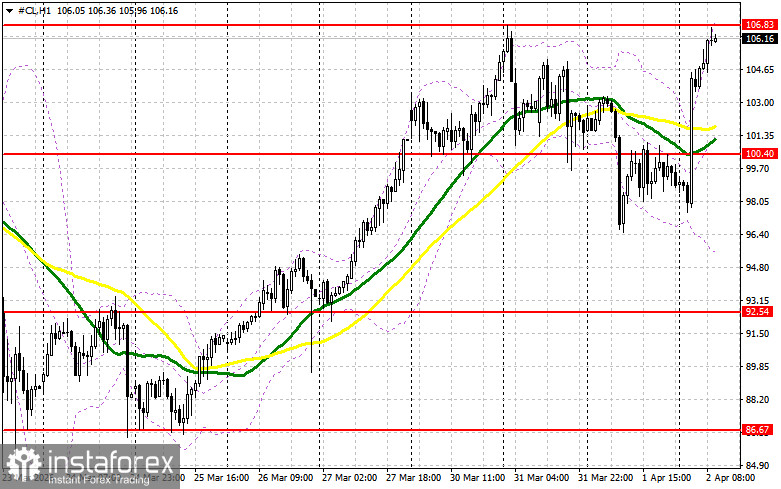
As for the current technical picture of oil, buyers need to take the nearest resistance at $106.83. This will allow them to target $113.36, above which it will be quite problematic to break through. The furthest target will be around $115.40. Should oil prices fall, bears will attempt to take control at $100.40. If successful, breaking this range will deliver a severe blow to bullish positions and could drive oil prices to a low of $92.54, with the prospect of reaching $86.67.


