
Vea también


 04.05.2026 04:33 AM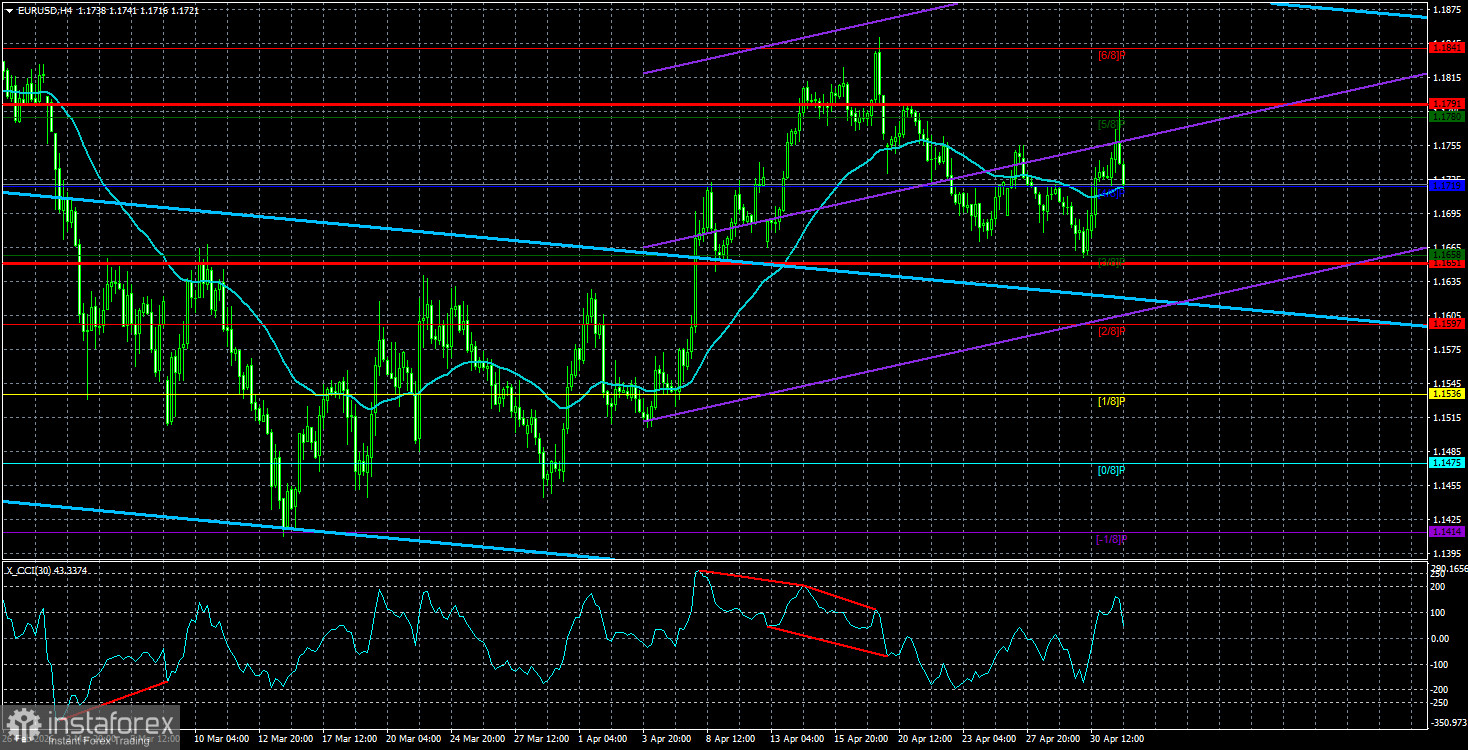
The EUR/USD currency pair will once again lean towards growth this week, as the market closely monitors geopolitical news. Last week, traders once again saw that fundamentals and macroeconomics matter only to a certain extent. Yes, there is a reaction to individual events, but it is typically weak. Central bank meetings no longer provoke the same level of activity among traders as they once did. Therefore, the macroeconomic background this week will again be viewed through the lens of geopolitics.
On Friday, it became known that Donald Trump rejected yet another Iranian proposal for resolving the conflict in the Middle East. As we have mentioned, the White House has taken a stance: "If you don't want to negotiate, you won't be trading oil, and we will be making staggering profits instead." Thus, it can be said that Trump is entirely comfortable with the current situation. US exports of oil and gas are on the rise, American consumers are paying more for fuel and goods, meaning more taxes are flowing into the country's treasury. Concerning the blockade of the Strait of Hormuz, it is not costly enough to undermine the profits from this operation.
Last week, we learned that the European Central Bank is ready to tighten monetary policy if the situation in the Middle East does not change. The situation in the Middle East is unlikely to change unless Iran starts a new round of warfare, realizing its deadlock. No matter how much Tehran might want to, the ball is currently in its court. It can either accept Washington's conditions for the nuclear deal or attempt to forcibly lift the blockade of Iranian ports. We believe that Iran will not surrender without a fight, meaning it will either seek other methods of oil and gas export or resume war in an attempt to lift the blockade. This scenario suggests that the US dollar may regain strength, but only this scenario can support the American currency.
Among the key macroeconomic and fundamental events in the Eurozone this week, we can note the speech by ECB President Christine Lagarde and EU retail sales data. It's likely everyone knows that neither of these events has significant market importance right now. Lagarde has already spoken three times last week and provided all the necessary information to the markets. Therefore, all attention will be directed to the US labor market and unemployment data, as well as to developments in geopolitics.
Over the four-hour timeframe, the EUR/USD pair has corrected by 200 pips in recent weeks, which is sufficient to sustain the upward trend. Thus, we believe that the euro currency will rise in the coming weeks and months unless a war in the Middle East resumes. American labor market statistics can be strong or weak, but they have almost no influence on the Federal Reserve's monetary policy at this time. Only a full recovery of the labor market can allow the Fed to tighten, which would benefit the dollar. However, there is no talk of a full recovery in the labor market in the near future. Additionally, the new Fed head, Kevin Warsh, is unlikely to support a rate hike.
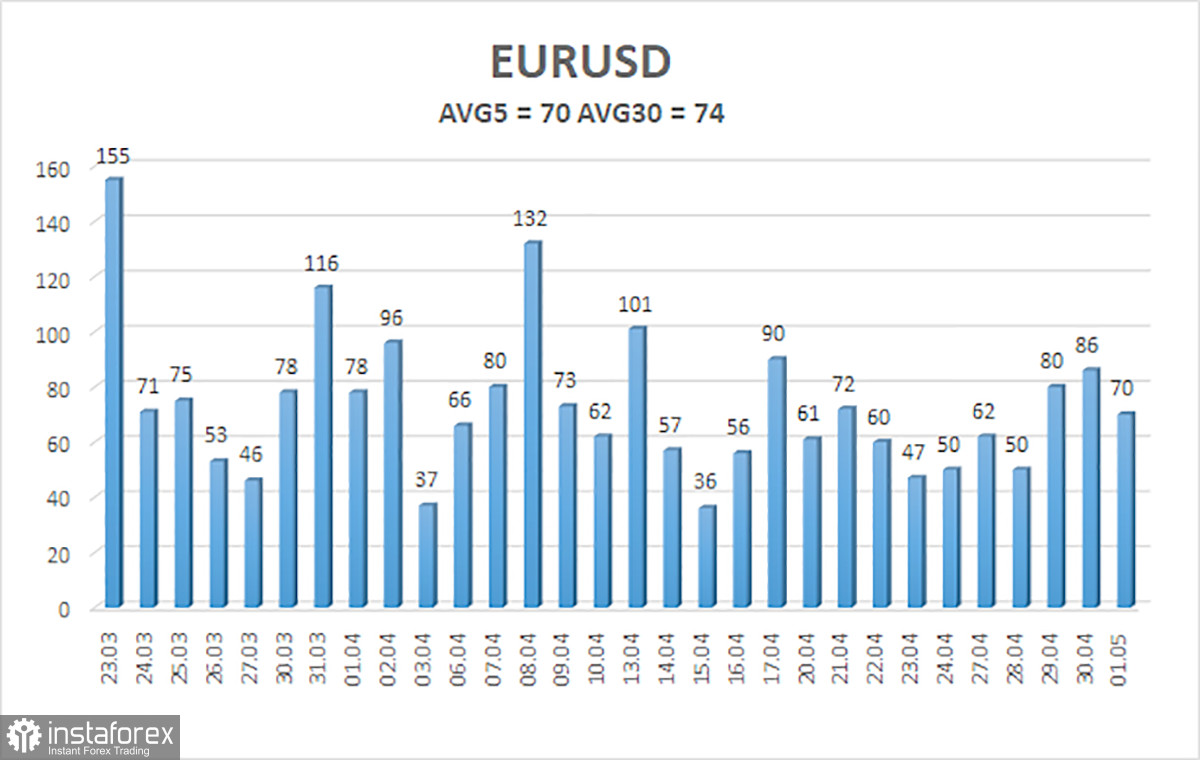
The average volatility of the EUR/USD currency pair over the last 5 trading days as of May 3 is 70 pips, which is considered "average." We expect the pair to trade between 1.1651 and 1.1791 on Monday. The upper channel of the linear regression has turned downward, indicating a bearish trend. However, the upward trend of 2025 may resume. The CCI indicator has entered the overbought zone and formed two "bearish" divergences, signaling a downward pullback.
The EUR/USD pair maintains an upward trend amid waning geopolitical influence on market sentiment and easing geopolitical tensions. The global fundamental backdrop for the dollar remains extremely negative; therefore, we still expect long-term growth for the pair. If the price is below the moving average, shorts can be considered with targets at 1.1658 and 1.1597 based on technical grounds. Above the moving average line, long positions with targets at 1.1780 and 1.1841 are relevant. The market continues to distance itself from geopolitical factors, while the dollar loses its only growth driver.


