
یہ بھی دیکھیں


 20.01.2026 12:25 AM
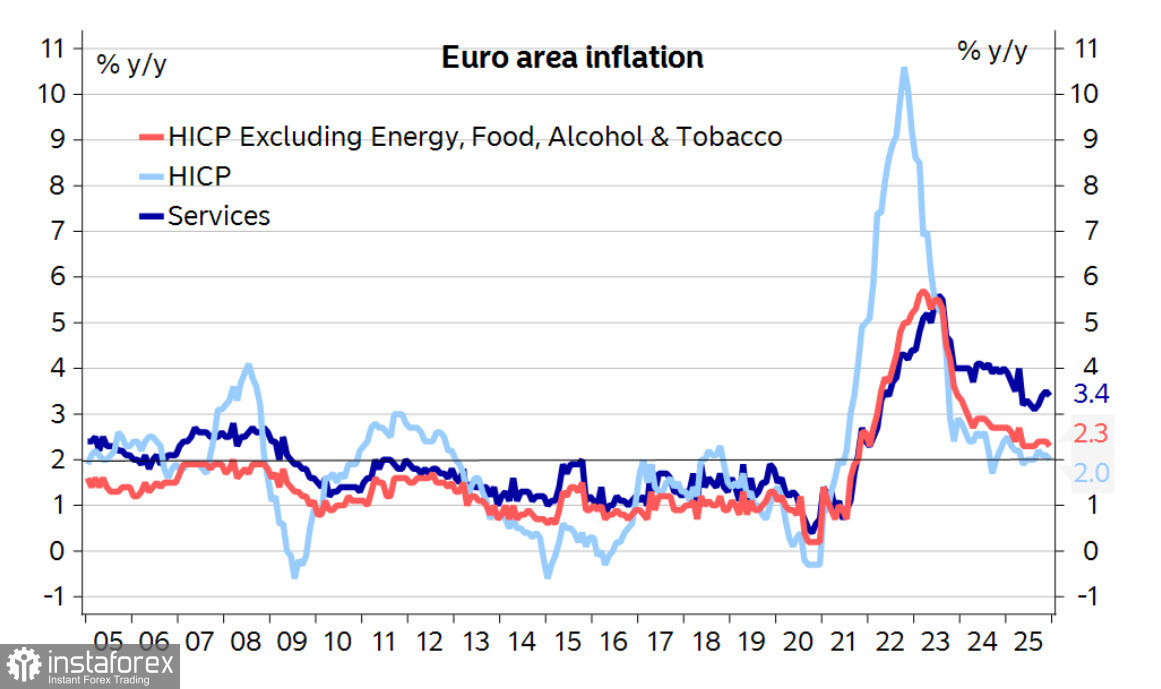
The European Central Bank has completed its rate-cutting cycle, finally confirming this decision at the last monetary policy meeting, where ECB staff raised their forecasts for growth and core inflation. Inflation returned to 1.9% year-on-year in December, and the main concern for the Bank at the moment is the sustained rise in prices in the services sector.
The eurozone economy looks, if not optimistic, then at least quite confident; expected growth will sooner or later shift inflationary risks upward, necessitating a rate hike. There is too much uncertainty here to forecast any timing.
External reasons can disrupt this scenario. One of them looks clearly threatening: the US president's demand to annex Greenland, backed by additional tariffs on eight European countries, including the United Kingdom, if they do not agree voluntarily. If the EU does not accept the ultimatum, which it obviously does not intend to do, tariffs will rise to 25% from June 1. This is a threatening scenario; its implementation would hit the economy and, in turn, completely change rate forecasts toward lower values.
There is also another, this time positive, scenario. The cessation of hostilities in Ukraine and a possible normalization of relations with Russia could sharply accelerate the impulse in eurozone economies, potentially leading to higher inflationary risks as consumption rises.
These scenarios could well interfere with the ECB's plans in the coming months. For now, we proceed from the view that the euro looks confident, and without taking geopolitical risks into account, there are very few reasons for its decline against the dollar.
This week, a whole series of speeches by ECB Governing Council members is expected, including Lagarde (three times); in addition, extraordinary meetings of EU leaders will be held to assess the situation around Greenland and coordinate possible countermeasures.
The net long position on the euro fell over the reporting week by a hefty 4.5 billion, to 19.3 billion. The bullish bias in the European currency remains evident. At the same time, the implied price again turned down from the long-term average.
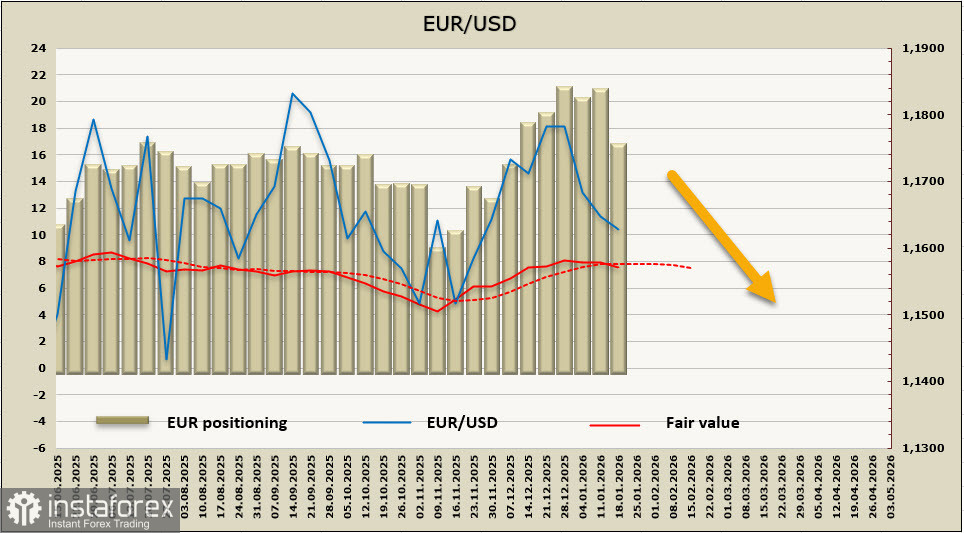
In the previous review, we assumed that a decline to the nearest support at 1.1520/40 was unlikely. In fact, nothing has changed, and it is still too early to abandon that forecast, except that the US claims on Greenland have taken on an aggressive character, which may lead to a new round of trade war. In the changed conditions, the euro is losing support, so a test of 1.1520/40 is more likely. Technically, a flag pattern is forming on the daily chart of EUR/USD after the rise in the first nine months of last year; we still believe that the consolidation will end with a resumption of euro gains, but in the short term, while tensions persist, there is less reason for upside.


