
Lihat juga


 30.01.2026 07:34 PM
The eurozone economy shows surprising resilience, but that hasn't helped EUR/USD. Investors are focused on Donald Trump's choice of a new Fed chair and the ECB's response to the recent euro strength. Underlying the situation is dollar weakness driven more by the White House's preferences than by macroeconomic data.
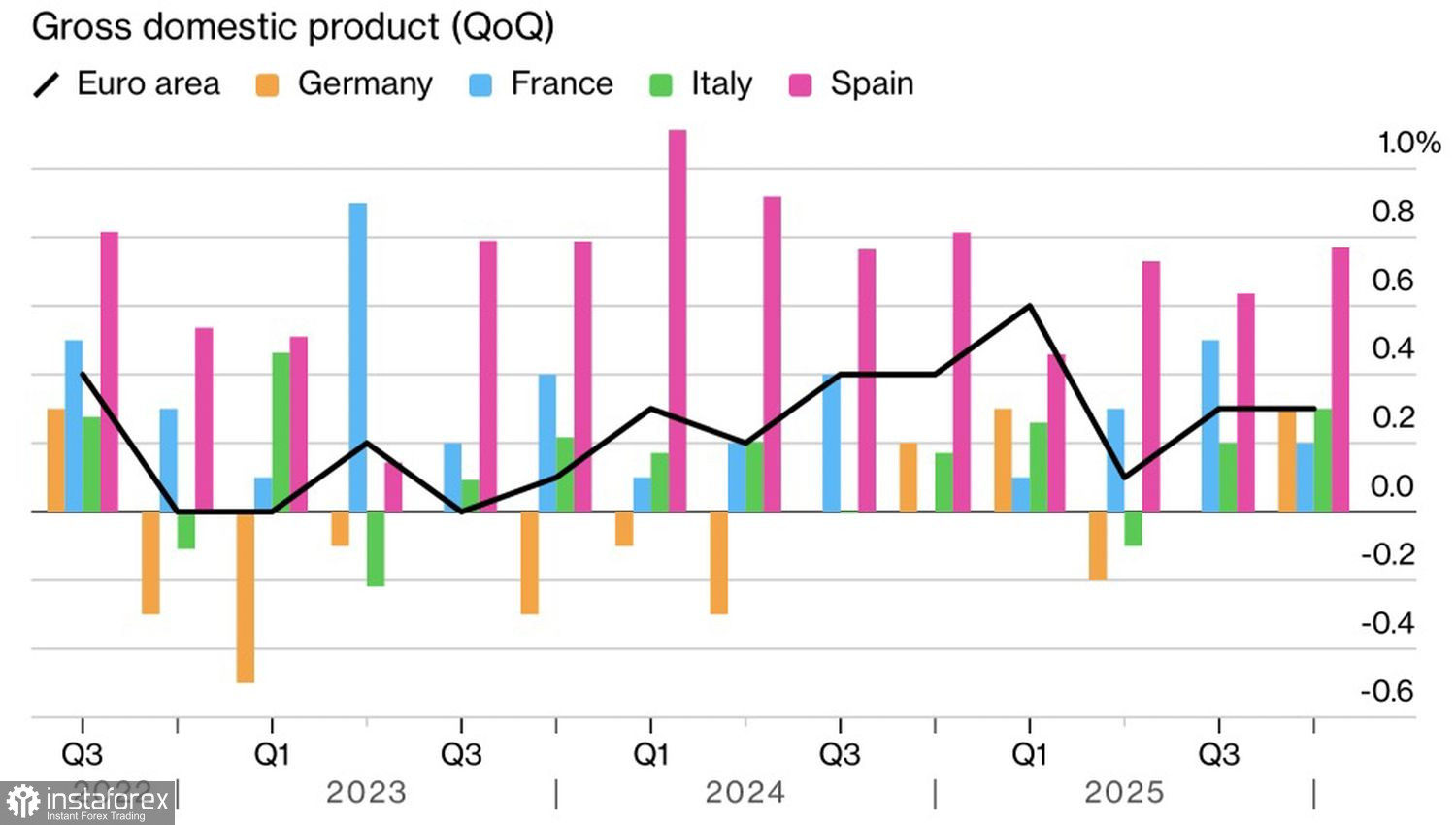
In Q4, the euro area's GDP expanded by 0.3%, beating Bloomberg consensus forecasts. Three of the four largest euro area economies — Germany, Italy and Spain — came in above expectations, with Spain confirming its role as a growth locomotive by expanding 0.8%.
European economic dynamics
The positive GDP prints strengthen the case for keeping the deposit rate at 2% at the February Governing Council meeting. Markets are more interested in whether the ECB will express discomfort about the recent EUR/USD rally. In theory, a stronger euro can contain inflation, which could create grounds for monetary easing — something no one expects. On the contrary, the share of Bloomberg?tracked analysts expecting rate hikes in 2026–2027 has risen from 25% to 33%.
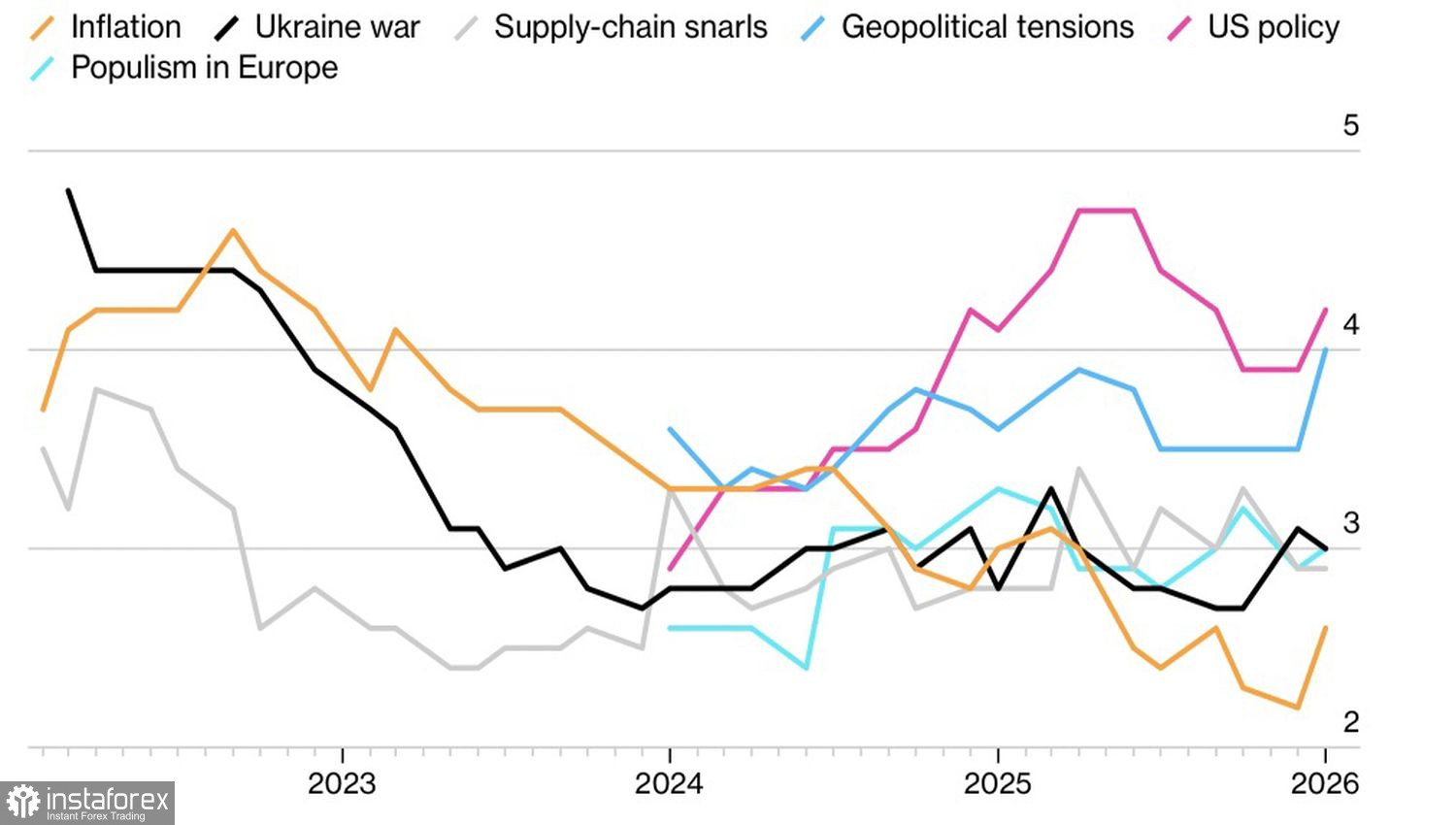
Respondents name the US White House policy and geopolitics as the main risks to the euro area economy. Concerns about the latter have increased amid Donald Trump's intentions to purchase Greenland, the related tariff threats and the president's subsequent backtracking.
Key risks to the euro area economy
Meanwhile, according to an insider in the US administration, the boss of the White House is poised to appoint Kevin Warsh as Federal Reserve chair. Investors view that choice as potentially bullish for the dollar. In the past, Warsh welcomed balance sheet reductions and acted as a Fed "hawk" while serving on the FOMC. However, to please Donald Trump, his stance would need to change fundamentally. Notably, the frontrunner has recently criticized the Fed for cutting rates too slowly.
The president himself was dissatisfied with the Fed's decision to hold interest rates at January's meeting. He argued that, given the large inflows of money into the United States resulting from tariffs, interest rates should be lower than anywhere else — by 2–3 percentage points from the current 3.75%.
Markets reacted to Trump's speech far more calmly than they did to his earlier remarks endorsing a weaker dollar. The White House's preferences on these issues are well known. The question is whether he can implement them, which would require at least a radical reshaping of the FOMC.
Technical picture
EUR/USD
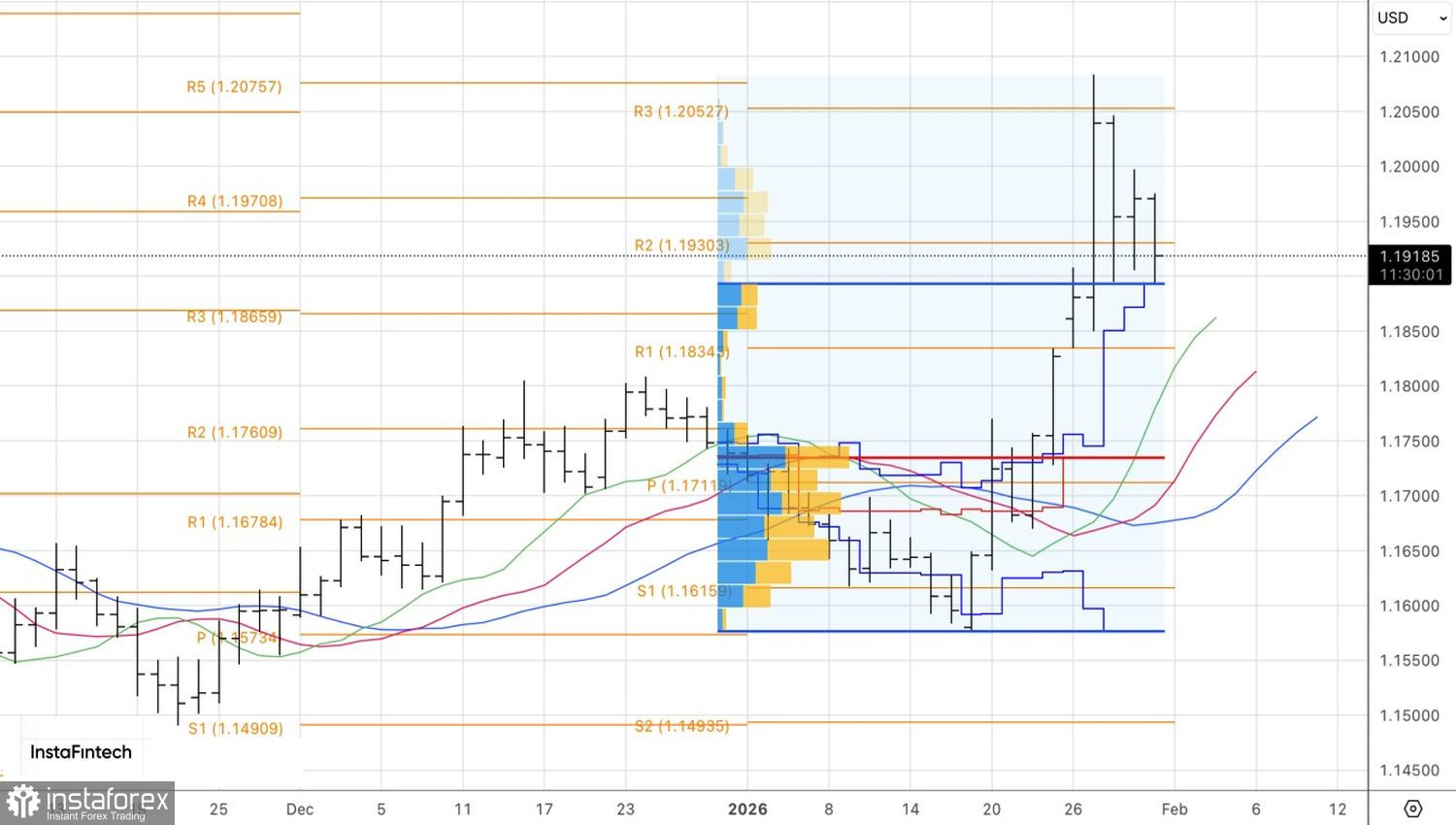
On the daily chart bears have attempted to play out an inside bar. The first assault on its lower boundary at 1.1905 failed. However, a successful repeat attack could open the door to further selling. It makes sense to return to buying only above 1.2000.


